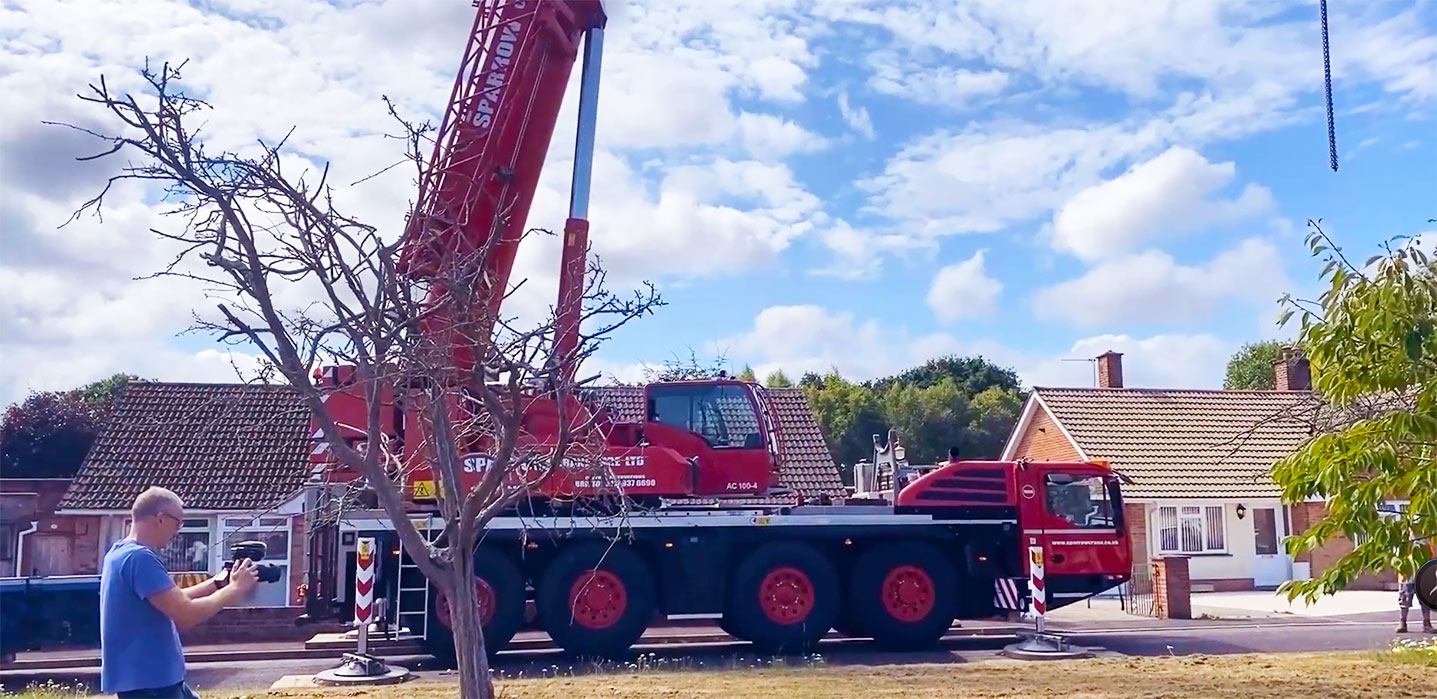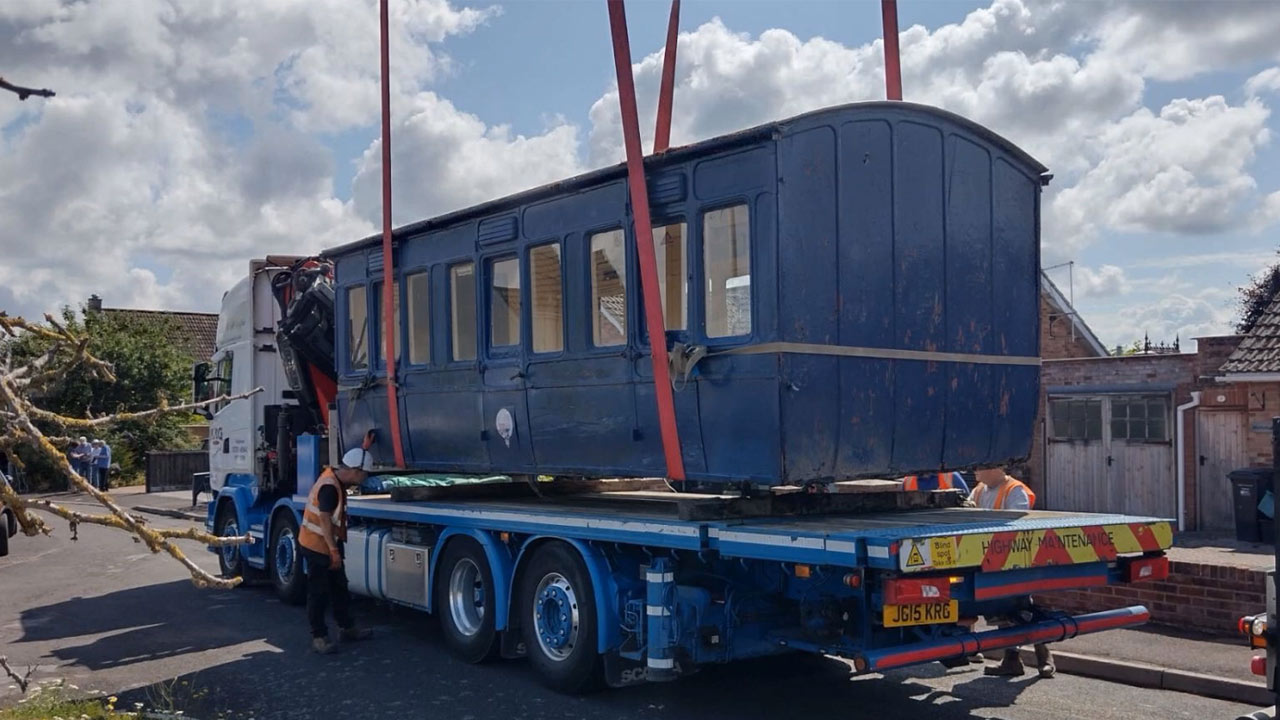
On 23 July 2025, our heavy‑lift crew rolled into Cannington, Nr. Bridgewater, Somerset, to tackle a rather unusual “garden shed.” Nestled behind a family home was the timber body of a Somerset & Dorset Joint Railway (S&DJR) Third‑Class carriage - built in the 1880s and retired from main‑line duty around 1930. Once resplendent in the S&D’s signature Prussian Blue, the coach had spent decades serving as makeshift storage, its wheels long gone but its heritage very much intact.
The lift
With space tight and access limited, a precise pick was essential. Our Demag all‑terrain crane eased the 140‑year‑old body over hedges and rooftops, landing it safely on transport for the short trip to North Dorset Railway, Shillingstone. There it joins two other unrestored S&D coaches from 1890 and 1894, plus fully restored First‑Class Coach 4 (1886), currently on loan to the Hornby One:One Museum in Margate.
A rolling‑stock detective story
Although S&D coaches carried only a simple body number, a carriage historian on site believes he has identified this particular vehicle - a discovery we’ll confirm during conservation. Originally a five‑compartment Third‑Class, the coach was even photographed in the early 1970s doing service as tennis‑court changing rooms in Mere, Wiltshire. Somewhere along the line, two compartments were removed, leaving a three‑bay interior that tells its own story of adaptive reuse.
Why it matters
The S&DJR - linking Bath to Bournemouth with branches to Burnham‑on‑Sea and Bridgwater - was beloved for its scenic route and distinctive blue rolling stock. Most coaches were scrapped or repurposed after withdrawal, so every survivor is a rare window into Victorian‑era provincial rail travel. With the help of North Dorset Railway and the Somerset & Dorset Railway Trust, this carriage will eventually stand alongside its restored siblings, telling a fuller story of the line’s passenger heritage.